Norfolk racing comes in two very different flavours, and October is the month they hand over to each other. On the North Denes at Great Yarmouth, with the sea a few hundred yards beyond the back straight, the flat season is winding down. Inland, past the Wensum valley, Fakenham's tight, square jumps track is getting ready for winter. Both are within an hour or so of Norwich, and between them they offer four afternoons of racing this month.
The October fixtures
Great Yarmouth (flat)
- Monday 5 October
- Monday 12 October
- Tuesday 20 October: the Season Finale
Fakenham (jumps)
- Friday 16 October: the Season Opener raceday
Great Yarmouth: three centuries by the sea
Racing at Great Yarmouth was first recorded in 1715, when the town's corporation granted a lease of land to a group of innkeepers so that they could stage race meetings. The sport was intermittent for nearly a century; only from 1810 does the official Racing Calendar record meetings with thoroughbred races and worthwhile prize money, held then on the South Denes. The fishing industry eventually decided the course's fate. Needing room to expand on the South Denes, it pressed the town, and in 1920 racing moved to the adjacent North Denes, with the old grandstands dismantled and rebuilt on the new site. The council took over the course in 1904; since 2001 it has been run in partnership with the private sector, and Arena Racing Company is now the majority stakeholder.
Yarmouth's proximity to Newmarket has long made it a place where the town's trainers bring young horses, and some very good ones have started here. In 1998 Dubai Millennium made a winning debut at Yarmouth under Frankie Dettori, before becoming one of the finest horses to carry Godolphin's colours. The track's most important race, the John Musker Fillies' Stakes, is run in September, so the October cards are mostly about handicaps, maidens and nurseries, with the occasional promising juvenile among them.
There is a literary footnote too. Anna Sewell, author of Black Beauty, the most famous horse story in the language, was born in Great Yarmouth in 1820, and later lived at Old Catton on the edge of Norwich.
Reading Yarmouth
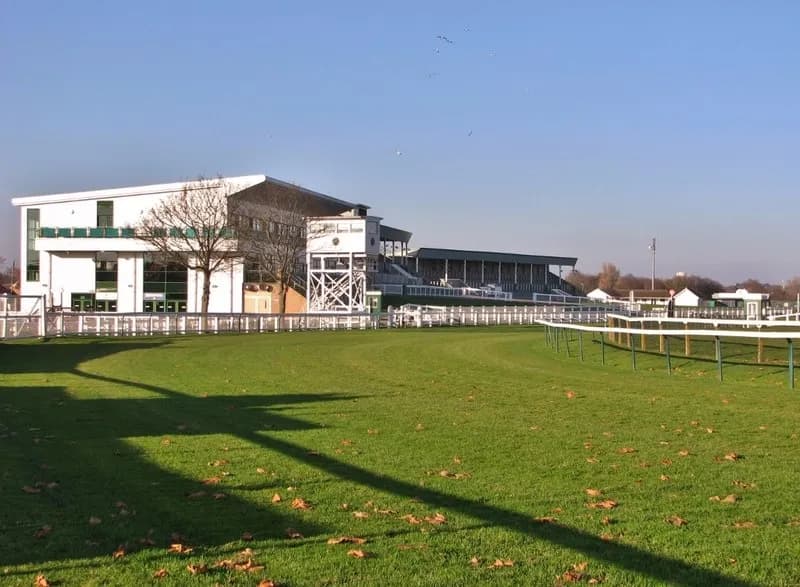
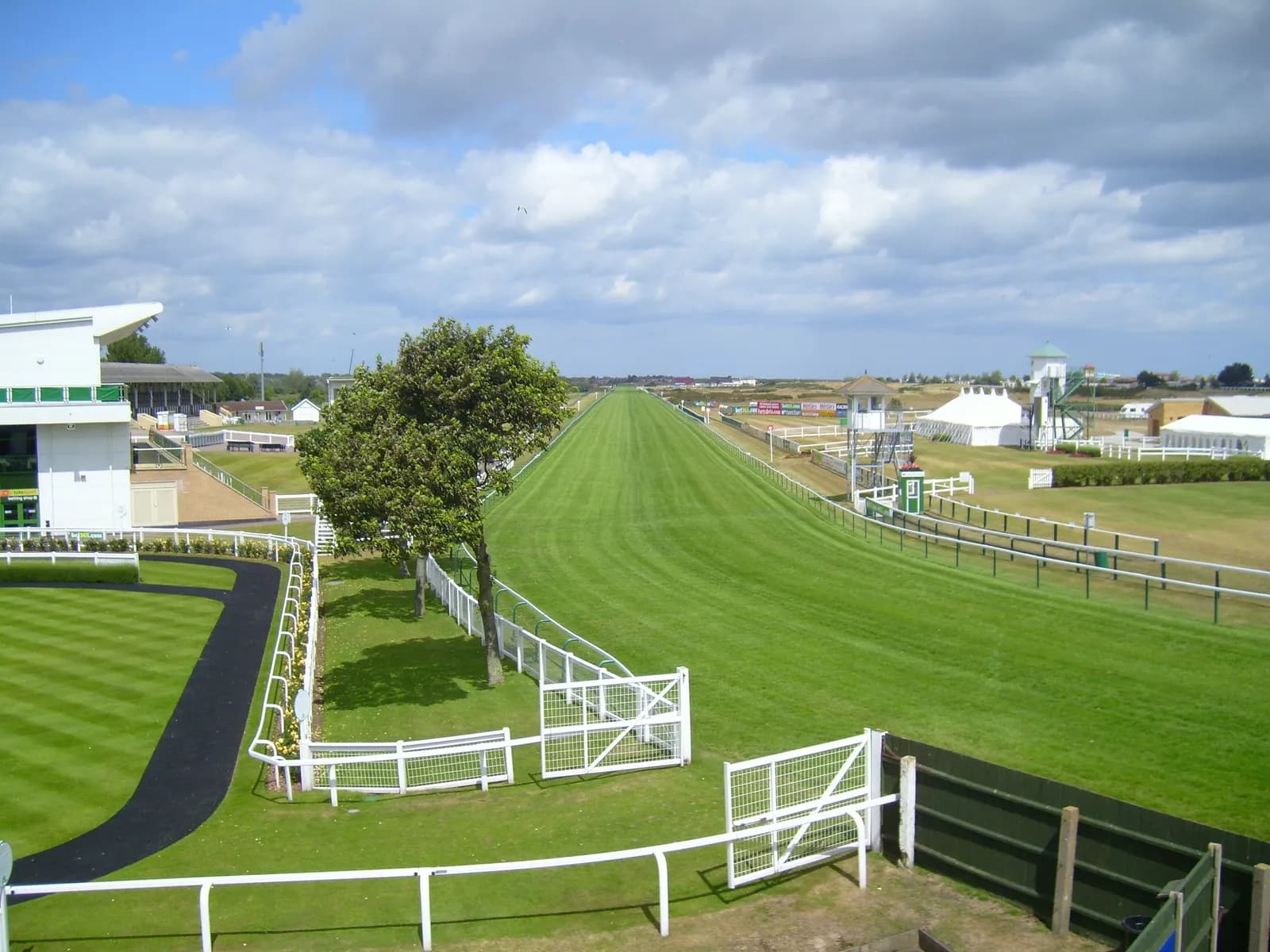
The course is a left-handed oval of about a mile and five furlongs, with two long straights, flat throughout. An extension to the home straight allows sprints and races up to a mile to be run on a straight course. That combination makes it a fair test: there are no steep gradients to catch out a tired horse, and on the straight course the draw and the position of the pace can count for a lot, so watch the first race or two to see whether one side of the track is riding faster. On a round-course race, the long run to the turn gives jockeys time to find a position.
Fakenham: a hunt meeting that grew up
Fakenham's racing began with the West Norfolk Hunt, whose race meeting moved to its present site south of the town in 1905 from East Winch, where drainage had become a problem. The first meeting here drew a good crowd, and the fixture grew into two annual days, on Easter Monday and at Whitsun. The original grandstand was put up in 1953, and in 1965 Fakenham Racecourse Ltd was formed to put the course on a secure footing. Royal connections run through its history: Queen Elizabeth The Queen Mother visited twice, and the then Prince of Wales opened the members' stand that bears his name in 2002. King Charles III is the course's patron. It is Norfolk's only National Hunt track.
Reading Fakenham
The course is left-handed, almost square, and only about a mile round, with the chase track on the outside and six fences per circuit. That makes it sharp: horses are always turning or about to turn, and those that can hold a handy position and jump quickly tend to have an advantage over long-striding types who need a galloping track. Early-season cards bring together summer jumpers who are race-fit and horses having a first run back, so the trainers' comments and recent form deserve as much attention as the ratings.
Your first day at the races
Neither course is formal. At Yarmouth a jacket for the sea breeze is more important than a tie; at Fakenham, waterproofs and boots for the grass are sensible in autumn. Under-18s are admitted free at Yarmouth when accompanied by an adult, with some exclusions, so check the details for the day you choose.
Wander to the parade ring before each race. You want a horse that looks well, walks out with a long stride and seems settled; heavy sweating or a fractious manner can mean a horse is boiling over before the start. At a jumps meeting, standing near a fence gives a real sense of the speed and skill involved. You can bet with bookmakers in the betting ring, who offer fixed odds, or with the Tote, where all bets go into a pool that is shared out among winning tickets. An each-way bet is two bets of the same size, one to win and one to place, so a five-pound each-way bet costs ten. Set a budget before you go, and keep betting as part of the entertainment, not the purpose of the day.
Making a day of it
Great Yarmouth is around 20 miles east of Norwich by the A47, and trains run from Norwich station to Great Yarmouth. The racecourse is on Jellicoe Road, about a mile north of the town centre. Leave time for the town: the Minster Church of St Nicholas, founded in 1101; the remains of the medieval town walls; the narrow Rows of the old quarter; and the Britannia Monument to Nelson, completed in 1819, a quarter of a century before Nelson's Column. The Time and Tide Museum tells the story of the herring fishery that once moved the racecourse. Charles Dickens sent David Copperfield here, and his description of Yarmouth as the finest place in the universe is still quoted with affection.
Fakenham is about 25 miles north-west of Norwich on the A1067. The town has had no railway since the 1960s, so a car or the bus is the way to go. It has been a market town since 1250 and still holds its Thursday market; on a Friday raceday the Market Place and the Corn Exchange of 1855 are worth a look, as is the parish church of St Peter and St Paul, whose 15th-century tower rises 115 feet over the town. The Fakenham Museum of Gas and Local History preserves the equipment once used to make town gas from coal.
Before setting off
Gate times, race times, tickets and the going for each meeting are on the Great Yarmouth and Fakenham racecourse websites. Weather can force inspections or abandonments at any time of year, and at the seaside or over jumps in October it is always worth checking on the morning before you leave.